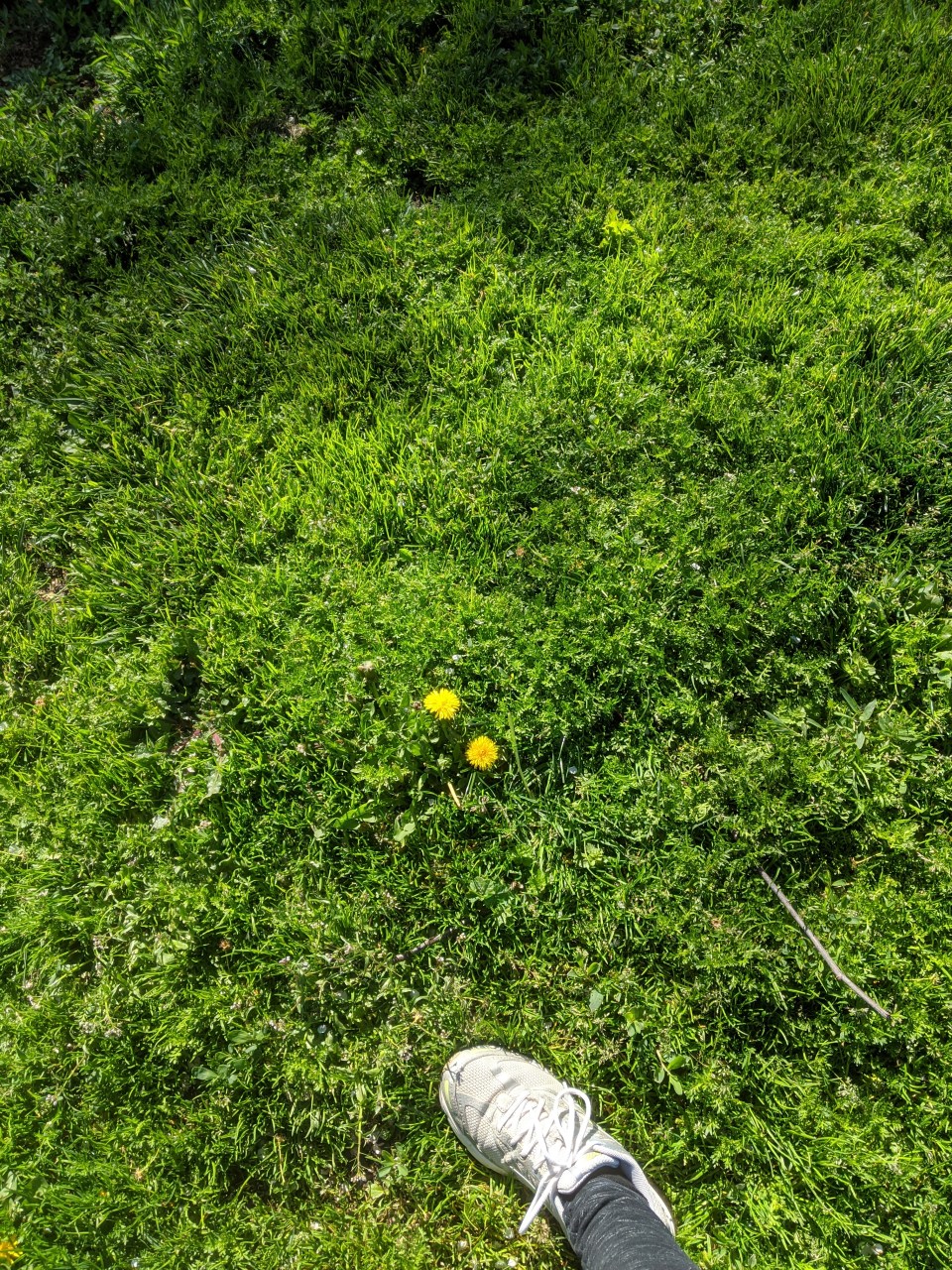
As I have begun to explore my goals and desires, one concept that has struck out to me was the concept of inner selves. In our adult world, I often find myself governed by my pragmatic, goal-oriented adult self. This self is hyper-rational and focused on achievement, and sometimes also image-conscious. This “adult” self is in contrast to my “child” self, who remains hidden behind my adult self. In this post, I want to explore the differences between my child and adult self, and allow strategies for balance between the two of them during my adult life.
As a young child, I was governed by a dominant sense of self which was free-flowing, curious, nonjudgmental, and inquisitive. As a child, I was extremely curious, and I always loved to read fiction, learn about history, and read about new applications in science and technology. I remember I often spend my entire break during recess holed up in a corner, buried in a new book. The world was delightful to me, and I wanted to spend as much time learning about it as possible. I remember that I would write short stories, and invent new games, and make up characters in my head. I would read and explore and create not out of a sense of achievement, or wanting to prove myself in any capacity, but just out of a sheer joy of existing and creating.
My personal relationships were the same way. As a child, there is an innocence and a lack of superficiality with personal friendships. I remember that I became friends with people simply because of how they made me feel in the moment, without any pretense. One of my best friends was someone who shared my joy of playing imaginary games, and I remember we’d pretend we were magical characters playing on the playground. Another friend shared my love of books and stories, and we’d stay up all night talking about the newest releases. I would do things out of joy and out of love, such as biking for hours in the cul-de-sac or taking long walks outside.
Sometime during adolescence, the adult version of myself eventually kicked in and became the more dominant self. The shift for me happened around adolescence, and it impacted my free-flowing child self in more ways than one. I became hyper aware of social norms and where I fit into the world, and I noticed myself sometimes becoming friends with people because of their popularity, rather than because of their intrinsic qualities. I also stopped doing things that I enjoyed out of sheer joy, and began to do things that I felt would set me up for success. For instance, instead of spending the summer reading or writing or playing with friends that made me feel alive, I began to spend summers doing extracurricular activities in order to get ahead.
For me, the dominance of my adult self peaked around late high school or early college. During this time, my hyper rational adult self was driving nearly all my decisions: whether I would study, what extracurricular activities I would engage in, how I spent my free time, and even to an extent what friends I hung out with. There were brief times in college in which I’d let my inner child self shine through: for instance, when I took a computer science class as a freshman, I was motivated to learn it out of curiosity and interest, rather than goal-setting, or when I travelled to Chile after my freshman year. Still, my hyper rational self was very dominant, and this dominance of my adult self was one of the leading factors in my depression. The suppression of my child self prevented me from experiencing true joy, and made life feel gray and nondescript.
As I went into late college and then after graduation, I began to realize the importance of letting your child self have a voice even into adulthood. I started to realize that it was in activities in which my child self was shining through that I often felt the most happy and satisfied. For instance, reading a great book, going on a beautiful hike, or having dinner with friends purely for the sake of enjoyment. I slowly began to feel the joy of creating again, writing short stories and scenes. I also allowed my child self to make a decision about which career I wanted to pursue, when I made the decision to switch my career from computer science into finance. I began to slowly experience the sheer joy of living in the moment and doing the things that I enjoyed, which slowly began to inject some color and texture into my life as I grew older.
Nevertheless, while most of the beginning of the blog post focused on the negatives of the hyper rational self, the adult self does have its place. Obviously, if I let my child self dominate the discussion, I might not be able to live a safe, healthy, and comfortable life. My adult self works in conjunction with my child self to ensure that my career is something that satisfies both my inner desires as well as allows me a comfortable life. Moreover, the adult self does have a purpose in refining and creating goals. My child self can sometimes be a little self-focused, but the adult self can help broaden the child self to look beyond myself and work to actually help people. For instance, my child and adult self worked together to help me decide to start tutoring nonprofit computer science classes for underprivileged kids. Similarly, my rational self and my child self have been working together to help me write a book, which was one of my longstanding goals, or to create this blog and podcast.
Ultimately, we do need both our child self and our adult self in life; however, I believe that the child self should be at the core. It should be the adult self’s goal to enable the child self’s dreams to come through, perhaps refining or expanding the child’s dreams along the way. The adult self, however, should not overrule the child self, forcing the child self to give up its dreams and natural joy of life. These days, I have focused more on creating harmony between my child self and my adult self, by keeping my child self near and close to my heart, and allowing my adult self to protect my child self. For me, my adult self is like a safe, comforting, and knowledgeable parent, who lifts the child self up onto her shoulders, to let the child self see, explore, create, and love.
 Mental Health Coffee Time